Why Funflation May Not Be Inflation
Entertainment prices are rising faster than almost anything else. Much of what is being measured may not be inflation in any useful sense.
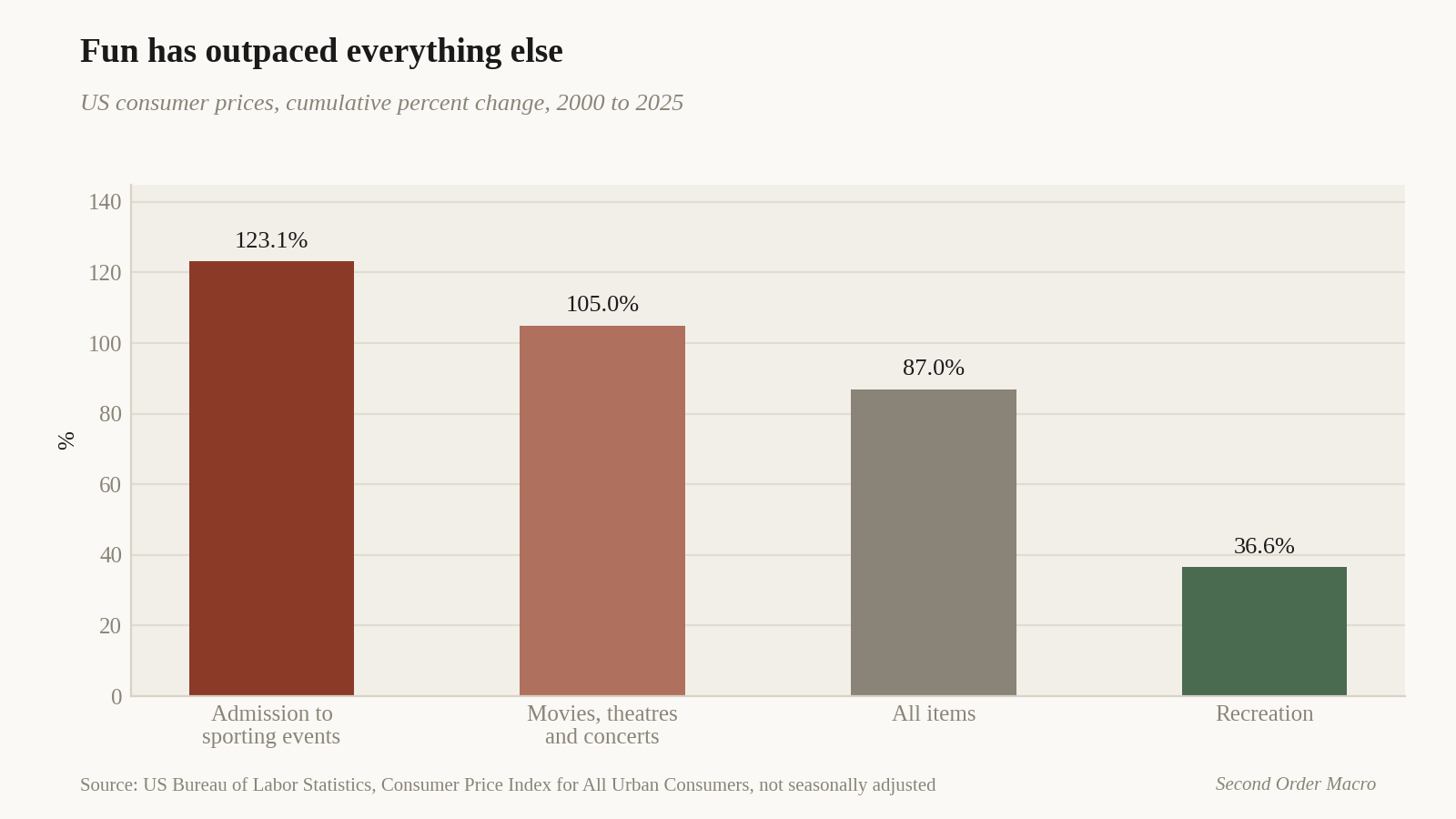
The cost of enjoying yourself has risen sharply. Concert pricing has moved by something close to 40% over recent years, and amusement parks and sporting events have seen annual inflation spike again this year. The phenomenon acquired the name funflation during the recovery from the pandemic, and it has since spread indoors as streaming and gaming subscriptions have been repriced.
Most coverage treats this as a consumer affairs story. It is more interesting than that, because PNC has noted that these categories are exerting upward pressure on core personal consumption expenditures, the measure the Federal Reserve watches most closely. A concert ticket has become a monetary policy input.
If the price of a fixed number of seats rises because sellers have become better at charging what buyers will pay, is that inflation?
I would argue it is not, at least not in the sense that matters for policy. The supply of seats in a stadium is genuinely fixed, and it always was. What changed is that promoters adopted dynamic pricing and learned to capture value that previously leaked away to resellers.
This is a textbook case of price discrimination. Under a single posted price, buyers willing to pay more capture the difference as consumer surplus, and secondary markets exist precisely to harvest it. Dynamic pricing transfers that surplus to the promoter. The measured price rises while the quantity of entertainment produced has not changed and no additional resources have been consumed. A statistical agency records inflation because a statistical agency records prices, which is the correct thing for it to do, but the economic content is a transfer between parties rather than a change in the price level.
A second mechanism sits alongside the first. Baumol observed that services requiring a fixed quantity of human effort cannot become more productive as manufacturing can. A string quartet needs four musicians today just as it did two centuries ago, so as wages rise elsewhere the relative price of such services must follow. This is real and permanent, and it explains much of why services inflation stays above goods inflation in every advanced economy. It is also not something interest rates can fix.
The distinction matters for reading the coming policy decisions. A central bank facing inflation driven by excess demand has a clear remedy. One facing relative price adjustment in services, alongside sellers becoming better at capturing surplus, is being asked to solve a problem with the wrong instrument.
There is a complication worth stating plainly. Research this summer has argued that spending on physical experiences is accelerating ahead of broader services, while PNC’s data shows consumers cutting home entertainment transactions, with younger cohorts pulling back most. Households may be protecting one large annual experience while economising on everything smaller.